
POLECO 2026 – Where Business, Knowledge and Environmental Technologies Meet
This year’s POLECO demonstrated that the environmental protection and waste management sectors are facing multiple simultaneous challenges. New regulations, rising costs, recycling and resource recovery requirements, process digitalisation, infrastructure security and the need to invest in new technologies are increasingly affecting both businesses and local governments.
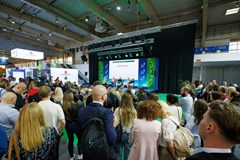
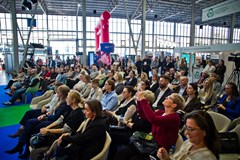
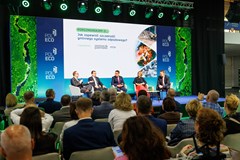
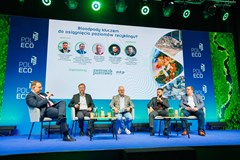
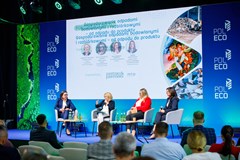
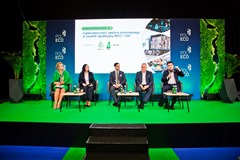
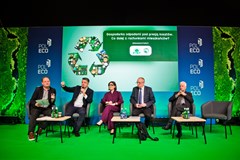
For three days, the Poznań International Fair was a meeting place for discussions on how to turn regulatory objectives into practical, implementable solutions.
Regulations Are Increasingly Transforming the Way Businesses Operate
One of the most prominent topics was the introduction of new regulatory obligations. PPWR, EPR, DIWASS, ELV, NIS2 and the potential inclusion of waste incineration plants in the EU Emissions Trading System (EU ETS) are no longer abstract concepts. They increasingly translate into specific investment decisions, costs and changes in how companies organise their operations.
Discussions at POLECO showed that the biggest challenge is no longer simply understanding the new regulations, but preparing organisations for their practical implementation.
For PPWR, this means adapting packaging, procurement processes and supply chain relationships. DIWASS requires changes to documentation procedures and the organisation of cross-border waste shipments. EPR remains a key issue for the entire market due to its impact on producers, municipal waste management systems and the costs borne by residents.
Waste Management Under Increasing Cost Pressure
Rising waste management costs were among the most important issues discussed throughout POLECO. The question is no longer only how to increase recycling rates, but also who should finance further investments and how to limit increases in fees paid by residents.
Discussions on EPR were therefore firmly rooted in economic realities. The industry needs investment in facilities, logistics, separate waste collection and new technologies, while simultaneously facing rising energy and labour costs and increasingly demanding legal requirements.
The potential inclusion of waste incineration plants in the EU ETS also remains an important issue, with possible implications for the costs of the entire waste management system.
Europe Needs Raw Materials – But Where Will They Come From?
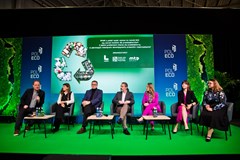
Raw material security was another prominent topic. Europe aims to reduce its dependence on imports of critical raw materials, but achieving this requires an efficient system for their recovery and reuse.
Discussions on critical raw materials went beyond battery recycling alone. They covered the entire value chain, from collection to the reuse of recovered materials in European industry.
Key challenges include access to suitable feedstock, the economics of recycling processes, the quality of secondary raw materials, waste flows and cooperation between science and industry.
Similar questions arose in discussions on plastics. Data from Plastics Europe indicated a slowdown in the circular transformation, the growing importance of imports and the need to restore the competitiveness of European industry.

Local Governments Are Looking for More Efficient Models
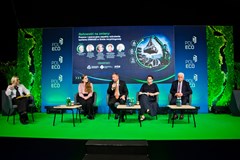
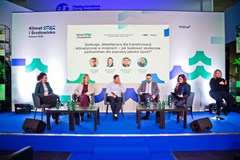
Many of the challenges discussed at POLECO concerned municipalities and municipal service companies. Local governments must increase separate collection rates, improve the effectiveness of waste management systems and limit rising operating costs.
Discussions about municipal waste collection centres (PSZOKs) therefore went beyond whether such facilities are needed. The focus was on how modern services for residents should be designed, where traditional collection centres reach their limits and what alternative solutions could improve service accessibility and the quality of separate waste collection.
Biowaste is becoming particularly important. Its proper collection and management can have an increasing impact on achieving recycling targets. In practice, however, this requires investment, better-quality separate collection and the development of facilities capable of making full use of this waste stream.
For three days, the Poznań International Fair provided a forum for discussing how to turn regulatory objectives into practical solutions.
Recycling Needs More Than Technology – It Needs an Efficient System
POLECO also demonstrated that even the best technologies are not enough if administrative and legal barriers restrict the industry's development.
This was particularly evident in discussions on end-of-life vehicle recycling and scrap management. The industry is preparing for changes resulting from new ELV regulations, which will increase the importance of recycled materials in the production of new vehicles.
At the same time, businesses highlighted lengthy administrative proceedings, the system of penalties and investment uncertainty.
Similar challenges affect construction waste. Increasing requirements for separate collection can only deliver results if recovered materials are actually reused. This makes it increasingly important to move away from thinking of waste as something to be disposed of and towards treating it as a resource or product that can re-enter the economic cycle.
Where Does Waste End and a Raw Material Begin?
This question recurred throughout the POLECO programme. It applied to critical raw materials, end-of-life vehicles, construction waste and producer responsibility.
In practice, the quality of recovered materials, their potential for reuse and the development of markets for secondary raw materials are becoming increasingly important. Without these elements, the circular economy will remain an ambition rather than a functioning economic model.
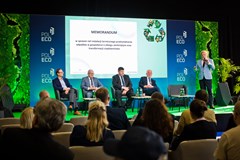
That is why producer responsibility and the question of when waste can once again become a valuable resource for the economy were among the important themes of this year's POLECO.
From Waste to Energy
The use of waste and by-products as sources of energy and raw materials also remains an important development direction.
Discussions on biogas and biomethane showed that the growth of this sector can support biowaste management, local energy production and the circular economy simultaneously.
Technologies Are Addressing an Increasing Range of Challenges
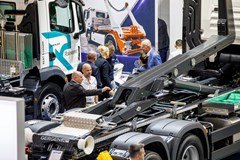
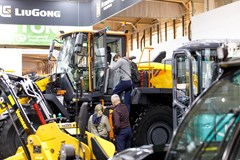
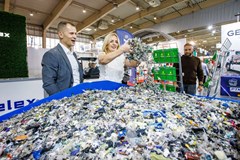
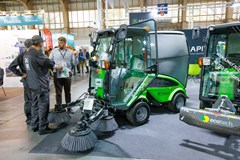
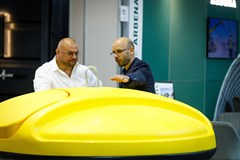
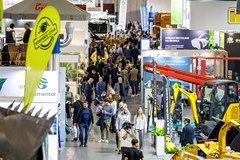
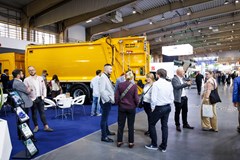
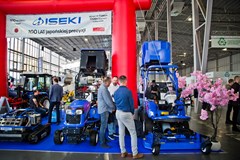
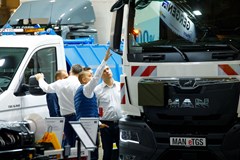
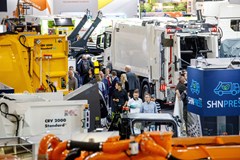
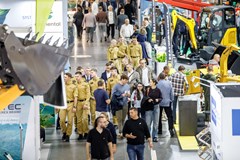
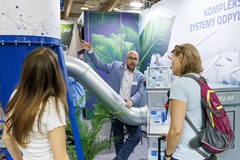
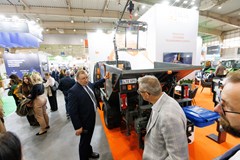
The POLECO exhibition offered a broad overview of technologies and solutions for waste management, recycling, street cleaning and municipal services, as well as for the logistics, food, packaging and construction industries.
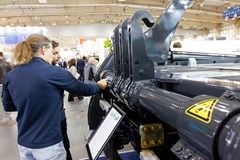
Exhibitors presented, among other things, specialised machinery and vehicles, solutions for waste collection, transport, processing and resource recovery, circular economy technologies, and systems designed to improve operational efficiency and workplace safety.
Some equipment was also demonstrated live, while the exhibition featured new products and market premieres.
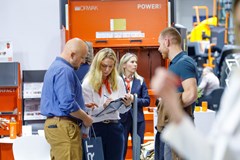
The exhibition also showcased solutions for process automation, monitoring, data management and record-keeping. These demonstrated how digitalisation is increasingly supporting the efficiency of waste management facilities and systems.
At the same time, growing digitalisation is increasing the importance of cybersecurity and infrastructure protection.
A Shared Challenge: Turning Regulations into Practice
If one conclusion stood out at POLECO 2026, it was that the pace of regulatory and technological change requires the entire industry to adapt quickly to new conditions.
Businesses must invest and transform their processes. Local governments need to identify more efficient waste management models. Producers must take greater responsibility for the entire life cycle of their products, while the recycling sector must deliver increasingly high-quality secondary raw materials.
POLECO 2026 also demonstrated that these challenges cannot be solved in isolation. They require new technologies, stable regulations, investment, efficient administration and cooperation between businesses, local governments, academia and the public sector.
This exchange of experience and perspectives was one of the most important aspects of this year's gathering in Poznań.